
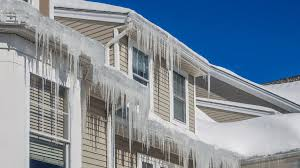
Winter brings beauty but also challenges for homeowners, particularly when ice dams form. These icy ridges along roof edges may seem harmless but are among the most damaging cold-weather roofing issues. Understanding how ice dams form and the problems they cause is key to protecting your home, especially in snowy and freezing climates.
What is an ice dam?
An ice dam is a ridge of ice that forms at the edge of a roof, typically near the gutters. It occurs when melting snow flows down the roof and refreezes before it can drain. As this cycle repeats, a thick icy barrier develops, trapping water behind it. Since the water cannot escape, it is forced back under the shingles, leading to significant damage both inside and outside the home.
How ice dams form step by step
Ice dams don’t form instantly—they develop through a gradual process that often goes unnoticed until damage occurs. It begins when heat escapes from the living space into the attic, warming the upper part of the roof even in freezing weather. Snow on this warmer section melts and flows down toward the colder edges of the roof, which remain cold because they extend beyond the heated part of the house. When the water reaches these cold edges, it refreezes. As more snow melts and refreezes, the ice builds up and spreads. Eventually, the ice dam grows large enough to block water from draining off the roof, leading to potential damage.
Why ice dams are a serious roof problem
Ice dams are more than a seasonal nuisance; they cause expensive, long-term structural damage. When water traps behind these ice barriers, it seeps under shingles and penetrates the roof decking. This moisture can soak through insulation and ceilings, leading to water stains, peeling paint, and warped drywall inside your home. Beyond cosmetic issues, consistent moisture exposure can lead to wood rot and mold growth, which pose health risks and shorten your roof’s lifespan. The weight of the ice can also pull gutters away from the roofline. Addressing the root cause of ice dams early is essential to avoiding these costly and stressful repairs.
Signs your home may be at risk
Many homeowners only notice ice dam problems once visible damage appears. However, there are several warning signs to watch for during the winter months. Large icicles hanging from your gutters often indicate uneven roof temperatures; while icicles aren’t always harmful, they usually signal that snow is melting and refreezing above the gutter line. Water stains on ceilings or walls are another major red flag. Because these stains can appear far from the roof’s edge, the source can be difficult to identify without a professional inspection. Additionally, unusually high heating bills, drafts, or cold rooms may suggest poor insulation and ventilation—the two primary causes of ice dam formation.
The role of insulation and ventilation
Proper insulation and ventilation are key to preventing ice dams. Insulation keeps heat in your living space and out of the attic. When the attic stays close to the outdoor temperature, snow on the roof is less likely to melt from below. Similarly, ventilation circulates cold air through the attic, helping to maintain a consistent roof temperature. Without proper airflow, trapped warm air can melt snow prematurely. Homes with old insulation or blocked vents are particularly vulnerable, so improving these systems can significantly reduce the risk of ice dams.
Long-term solutions and prevention strategies
While temporary fixes like using a roof rake can help in an emergency, they don’t solve the underlying problem. Long-term prevention involves balancing the roof’s temperature. You can prevent warm air from rising by sealing air leaks around attic access points, light fixtures, and vents. Upgrading your insulation also helps keep heat where it belongs. Additionally, maintaining clear gutters allows water to drain properly before it has a chance to freeze. Regular winter roof inspections can help you catch small issues before they become major problems. For homeowners worried about recurring winter damage, ice dam prevention in Utah combines insulation, airflow, and roof design solutions instead of relying on short-term fixes.
Conclusion
Preventing ice dams is far more cost-effective than repairing the destruction they leave behind. Once water breaches your roofing, the resulting damage can persist long after the snow melts. Taking a proactive approach protects your roof, ceilings, walls, and insulation while ensuring year-round indoor comfort. Small, pre-winter upgrades offer lasting benefits for years. By understanding how ice dams form and the risks they pose, you can make informed decisions to safeguard your home and maintain peace of mind throughout the winter.
