
Applying for an NBI clearance used to be one of those tasks Filipinos dreaded. It meant waking up early, standing in long lines, dealing with unclear instructions, and sometimes going home empty-handed because slots were already full. Many people remember spending almost an entire day just to submit an application, only to be told to come back again. It was exhausting, frustrating, and honestly discouraging.
The introduction of the NBI appointment system changed that experience in a big way. What once felt chaotic slowly became more organized, predictable, and manageable. While it’s not perfect, the shift to an online appointment system has clearly simplified clearance applications in the Philippines. This article takes a deep look at how that transformation happened, what changed, what still needs improvement, and why the system matters not just for applicants—but for public service as a whole.
Understanding the NBI Appointment System
NBI Appointment is an online scheduling platform designed to manage the flow of applicants applying for an NBI clearance. Instead of allowing unlimited walk-ins, the system requires applicants to choose a date, time, and branch in advance.
At its core, the system aims to solve one major problem: overcrowding. By spreading applicants across available time slots, NBI offices can handle requests more efficiently. Applicants, on the other hand, gain clarity. They know exactly when to show up, where to go, and what to expect.
What makes this system impactful is not just the technology itself, but the mindset behind it. It represents a shift from reactive service to planned service—something government offices have struggled with for decades.
How NBI Clearance Applications Worked Before
Before the appointment system, applying for an NBI clearance was largely a walk-in process. Anyone could show up at an NBI office at any time, leading to overcrowded waiting areas and unpredictable processing times.
Applicants often faced extremely long queues, even before offices opened, confusing instructions posted only on bulletin boards, manual form filling that took time and caused errors, and repeated visits due to system cutoffs or incomplete requirements.
Many people shared the same story: they lined up at 4 a.m. but still didn’t make it inside. Others lost income for the day because they had to skip work just to apply. The lack of scheduling made the process stressful, especially for first-time applicants. In short, the old system relied heavily on patience rather than efficiency.
Key Features of the NBI Appointment System
The current NBI appointment system introduced several features that directly addressed long-standing problems.
Online scheduling allows applicants to choose their preferred branch, date, and time, which alone reduced unnecessary waiting. Digital data entry minimizes errors by letting applicants review and correct details before submission. Controlled daily volume ensures branches only accept the number of applicants they can realistically handle. Integration with payment channels reduces bottlenecks inside offices.
Together, these features work as a system rather than isolated improvements.
Step-by-Step Overview of the Simplified NBI Clearance Process
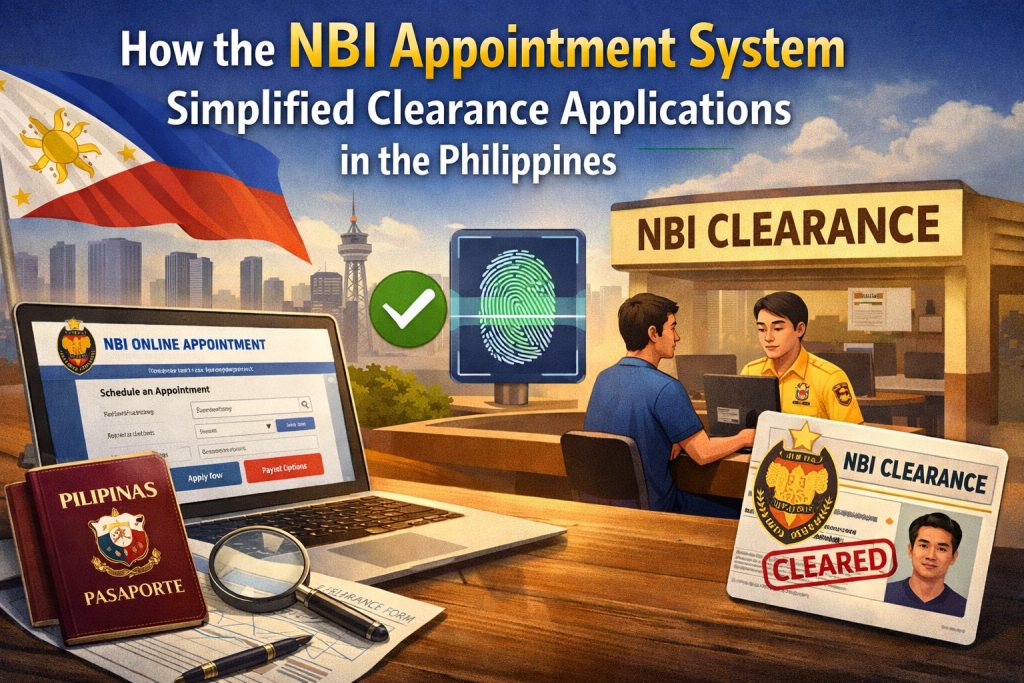
Applicants begin by registering online and filling out personal information used for verification. They then select an appointment schedule and branch location, allowing them to plan ahead instead of guessing.
After scheduling, applicants proceed with payment through available channels. Confirmation of payment secures the appointment. On the appointment date, applicants visit the selected branch for biometrics and verification. Because schedules are controlled, waiting times are significantly shorter.
Finally, applicants either receive their clearance on the same day or are informed of the release date if further verification is needed. The process is faster and more transparent.
How the NBI Appointment System Improved Efficiency
Efficiency is where the appointment system truly stands out. By managing demand through scheduling, NBI offices can focus on processing rather than crowd control.
Applicants move through steps in a predictable manner, and staff no longer deal with sudden surges of walk-ins. Systems are prepared in advance based on the number of appointments booked. This leads to better time management, reduced stress for both applicants and staff, and fewer manual corrections due to pre-encoded data.
Efficiency here is not just about speed but about smoother flow and fewer mistakes.
Benefits of the NBI Appointment System for Applicants
For applicants, the benefits are both personal and practical. Time savings are immediate, as knowing exactly when to show up eliminates unnecessary waiting. This is especially important for workers, students, and parents.
Reduced stress is another major benefit. The process feels controlled and organized rather than competitive and uncertain. Applicants also gain confidence from receiving appointment confirmations and clear instructions.
While delays and technical issues still happen occasionally, the experience is far more humane compared to the past.
Benefits for the Government and NBI Offices
The appointment system also benefits the government. NBI offices now operate with clearer workload data, allowing better staff allocation and reduced overtime.
Digitized records improve data accuracy and security, reducing paper use and lost files. On a broader level, the system supports modernization and transparency goals, showing that public service can adapt and improve.
Common Issues Still Faced by Applicants
Despite improvements, challenges remain. Limited appointment slots in densely populated areas can be frustrating. Website slowdowns during peak hours still occur.
Name hits that delay release continue to be a common concern, even when the process itself is smoother. These issues show that while technology simplifies processes, ongoing refinement is necessary.
Tips for a Smooth NBI Appointment Experience
Preparation makes a big difference. Double-check all personal details before submitting them online, as small errors can cause delays.
Book appointment slots early, especially during peak seasons. Arrive on time and follow the scheduled slot. Maintaining patience also helps, as minor hiccups can still happen in public systems.
Impact of the NBI Appointment System on Public Service Efficiency
Beyond individual applications, the NBI appointment system reflects a broader shift in public service delivery. It reduces inefficiencies without removing the human element.
Staff can focus on verification and assistance instead of crowd management. This model sets an example for other government services, proving that thoughtful digital systems can improve citizen experiences.
Frequently Asked Questions (FAQs)
Is the NBI appointment system mandatory?
Yes, most branches now require appointments to manage applicant flow.
Does an appointment guarantee same-day release?
Not always. Some cases require additional verification, but scheduling improves overall processing speed.
Can appointments be rescheduled?
In many cases, yes, depending on system availability.
Is the process easier for first-time applicants?
Generally, yes. Clear steps and scheduling make the process less intimidating.
Conclusion
The NBI appointment system has undeniably simplified clearance applications in the Philippines. It transformed a once-stressful process into something more structured, predictable, and manageable. While challenges still exist, the improvements are real and meaningful.
More than just an online tool, the system reflects a shift toward better public service—one that respects people’s time, reduces stress, and improves efficiency. It may not be perfect yet, but compared to the past, it represents progress many Filipinos genuinely appreciate.
